Orion-NASA

Saturday, 13 October 2012


                               ATOMIC CLOCK


FOCS 1, a continuous cold caesium fountain atomic clock in Switzerland, started operating in 2004 at an uncertainty of one second in 30 million years


     Since long, man has used clocks and watches to measure time. But those were crude watches and didn't measure time accurately. A few years ago, scientists were able to develop a very sophisticated clock known as ATOMIC CLOCK. With its development a new era has been ushered in the field of time measurement. It is a wonder clock, that remains accurate to one second in 1,700,000 years.

     Today we have mainly three types of clocks and watches : mechanical, electrical and electronics.
MECHANICAL CLOCKS and WATCHES are spring driven; ELECTRIC CLOCKS are battery powered and the ELECTRONIC ones are quartz based. All these clocks and watches show time quite accurately. But if they run continuously for long period, they can get slow or fast.

     Now the smallest internationally accepted unit of time is the ATOMIC SECOND. It is based on atomic clock, and defined as the time interval during which exactly 9192631770 cycles of the hyperfine resonance frequency of the ground state of the caesium atom occur. Prior to this the second was the standard of time which was measured as a portion of earth's rotation as 1/86400th of a day. An atomic clock uses the frequencies produced by atoms or molecules. The time is measured by counting the number of vibrations. Most of the atomic clock make use of frequencies in the microwave range from about 1400 to 40,000 MHz.

    In 1947, an oscillator controlled by frequencies of AMMONIA MOLECULE was constructed. An ammonia controlled clock was built in 1949 at the National Bureau of Standards, Washington D.C.

     In 1955, a CAESIUM-BEAM atomic clock of high precision was first put in operation at the National Physics Laboratory, Teddington, England. After that a number of laboratories started producing commercial models of caesium-beam atomic clocks.
Caesium Beam Tube
                                         
     In the Caesium clock, the Caesium is heated in a small oven. The Caesium produces a beam which is directed through an electromagnetic field. The 5 MHz output from a quartz clock is multiplied to give 9192631770 Hz that controls the electromagnetic field. Part of the 5 MHz output is used to derive a clock display unit which indicates time.

Tuesday, 9 October 2012


MY HEART WILL GO ON............


Every night in my dreams
I see you, I feel you
That is how I know you go on

Far across the distance
And spaces between us
You have come to show you go on

Near, far, wherever you are
I believe that the heart does go on
Once more you open the door
And you're here in my heart
And my heart will go on and on

Love can touch us one time
And last for a lifetime
And never let go till we're gone

Love was when I loved you
One true time I hold to
In my life we'll always go on

Near, far, wherever you are
I believe that the heart does go on
Once more you open the door
And you're here in my heart
And my heart will go on and on

You're here, there's nothing I fear
And I know that my heart will go on
We'll stay forever this way
You are safe in my heart
And my heart will go on and on
---------------------------------------------------------------------------------


Friday, 5 October 2012


WIRELESS CHARGING


Inductive charging (also known as "wireless charging") uses an electromagnetic field to transfer energy between two objects. This is usually done with a charging station. Energy is sent through inductive coupling to an electrical device, which then can use that energy to charge batteries or run the device.

Magne Charge wall, handheld, and floor mount


Induction chargers typically use an induction coil to create an alternating electromagnetic field from within a charging base station, and a second induction coil in the portable device takes power from the electromagnetic field and converts it back into electrical current to charge the battery. The two induction coils in proximity combine to form an electrical transformer.

Series resonant inductive charging circuit.


Greater distances can be achieved when the inductive charging system uses resonant inductive coupling.
Inductive Charging. The primary coil in the charger induces a current in the secondary coil in the device being charged.


Examples

  • An early example of inductive power transfer is the crystal radio which used the power of the radio signal itself to power headphones. Some such radios can even use the power of a stronger station to increase the volume of a weaker station

  • Transcutaneous energy transfer (TET) systems in artificial hearts and other surgically implanted devices.

  • Oral-B rechargeable toothbrushes by the Braun company have used inductive charging since the early 1990s.


  • Hughes Electronics developed the Magne Charge interface for General Motors. The General Motors EV1 electric car was charged by inserting an inductive charging paddle into a receptacle on the vehicle. General Motors and Toyota agreed on this interface and it was also used in the Chevrolet S-10 EV and Toyota RAV4 EV vehicles.

  • In 2006, researchers at the Massachusetts Institute of Technology reported that they had discovered an efficient way to transfer power between coils separated by a few meters. The team, led by Marin Soljačić, theorized that they could extend the distance between the coils by adding resonance to the equation. The MIT wireless power project, called WiTricity, uses a curved coil and capacitive plates.

  • At CES in January 2007, Visteon unveiled their wireless charging system for in vehicle use that could charge anything from cell phones to mp3 players.

  • April 28, 2009: An Energizer inductive charging station for the Wii remote is reported on IGN.

  • At CES in January 2009, Palm, Inc. announced their new Pre smartphone would be available with an optional inductive charger accessory, the "Touchstone". The charger came with a required special backplate that became standard on the subsequent Pre Plus model announced at CES 2010. This was also featured on later Pixi, Pixi Plus, and Veer 4G smartphones. Upon launch in 2011, the ill-fated HP Touchpad tablet (after HP's acquisition of Palm Inc.) had a built in touchstone coil that doubled as an antenna for their NFC-like Touch to Share feature.

  • In August 2009 A consortium of interested companies called the Wireless Power Consortium announced they were nearing completion for a new industry standard for low-power Inductive charging called Qi 

  • Intel and Samsung plan to launch Qi wireless charging devices for phones and laptops in 2013.

  • Nokia launched two smartphones (the Lumia 820 and Lumia 920) on 5 September 2012, which feature Qi wireless charging.
nokia-lumia-920-wireless-inductive-charger-charging


Advantages


  • Lower risk of electrical shock or shorting out when wet because there are no exposed conductors. e.g., for toothbrushes and shavers, or outdoors.
  • Consistent and secure connections - no corrosion when the electronics are all enclosed away from water or oxygen in the atmosphere.
  • Safer for implants - for embedded medical devices, allows recharging/powering through the skin rather than having wires penetrate the skin, which would increase the risk of infection.
  • Convenience - rather than having to connect a power cable, the device can be placed on or close to a charge plate or stand.


Disadvantages


  • Lower efficiency, waste heat - The main disadvantages of inductive charging are its lower efficiency and increased resistive heating in comparison to direct contact. Implementations using lower frequencies or older drive technologies charge more slowly and generate heat within most portable electronics.
  • More costly - Inductive charging also requires drive electronics and coils in both device and charger, increasing the complexity and cost of manufacturing.
  • Slower charging - due to the lower efficiency, devices can take longer to charge when supplied power is equal.
  • Inconvenience - When a mobile device is connected to a cable, it can be freely moved around and operated while charging. In some implementations of inductive charging (such as the Qi standard), the mobile device must be left on a pad, and thus can't be moved around or easily operated while charging.
  • Standards - There are no De facto standards, potentially leaving a consumer, organisation or manufacturer with redundant equipment when a standard emerges
Newer approaches reduce transfer losses through the use of ultra thin coils, higher frequencies, and optimized drive electronics. This results in more efficient and compact chargers and receivers, facilitating their integration into mobile devices or batteries with minimal changes required. These technologies provide charging times comparable to wired approaches, and they are rapidly finding their way into mobile devices.
For example, the Magne Charge vehicle recharger system employed high-frequency induction to deliver high power at an efficiency of 86% (6.6 kW power delivery from a 7.68 kW power draw).


Wednesday, 26 September 2012


                                           THRUST SSC


THRUST SSC


ThrustSSC, also spelt Thrust SSC (SuperSonic Car) by secondary sources, is a British jet-propelled car developed by Richard Noble,Glynne Bowsher, Ron Ayers and Jeremy Bliss.
ThrustSSC holds the World Land Speed Record, set on 15 October 1997, when it achieved a speed of 1,228 km/h (763 mph) and became the first car to officially break the sound barrier.
ThrustSSC on display in Coventry
                                               

Rear view of ThrustSSC, with a panel removed to show one of its aluminium alloywheels, at Coventry Transport Museum.


The car was driven by Royal Air Force fighter pilot Wing Commander Andy Green in the Black Rock Desert in Nevada, United States. It was powered by two afterburning Rolls-Royce Spey turbofan engines, as used in the British version of the F-4 Phantom II jet fighter. The car was 16.5 m (54 ft) long, 3.7 m (12 ft) wide and weighed 10.5 tons (10.7 t), and the twin engines developed a net thrust of 223 kN (50,000 lbf), a power output of 110,000 bhp (82MW), burning around 18 litres per second (4.0 Imperial gallons/s or 4.8 US gallons/s). Transformed into the usual terms for car mileages based on its maximum speed, the fuel consumption was about 5,500 l/100 km or 0.04 mpg U.S.

One of the engines at Flixton Air museum, Norfolk.

The record run in October 1997 was preceded by extensive test runs of the vehicle in Autumn 1996 and Spring 1997 in the Al-Jafr desert (located in Ma'an Governorate) in Jordan, a location unknown before for its capabilities as a test range for high speed land vehicles, with numerous advantages compared to the salt deserts of the Western United States.
After the record was set, the World Motor Sport Council released the following message:
The World Motor Sport Council homologated the new world land speed records set by the team ThrustSSC of Richard Noble, driver Andy Green, on 15 October 1997 at Black Rock Desert, Nevada (USA). This is the first time in history that a land vehicle has exceeded the speed of sound. The new records are as follows:
  • Flying mile           1227.986 km/h (763.035 mph)
  • Flying kilometre   1223.657 km/h (760.343 mph)
In setting the record, the sound barrier was broken in both the north and south runs.
Paris, 11 November 1997.
In 1983 Richard Noble had broken the world land speed record with his earlier car Thrust2, which reached a speed of 1,018 km/h (633 mph). Both ThrustSSC and Thrust2 are displayed at the Coventry Transport Museum in Coventry, England.
The date of Andy Green's record came exactly a half century and one day after Chuck Yeager broke the sound barrier in Earth's atmosphere, with theBell X-1 research rocket plane on 14 October 1947.
Several teams are competing to break the record, including Richard Noble's Bloodhound SSC project and the North American Eagle project.

The team with ThrustSSC.
                                                   

Sunday, 23 September 2012


Top 5 Fastest Bikes in the World
1.    Honda CBR 1100XX Super Blackbird
                                                           178mph (286 km/h)
                                       
Honda CBR 1100 XX Super Blackbird is a sport-touring motorcycle built by Honda. It combines big engine power, Easy operational error-tolerance with touring comfort. The Blackbird production started in 1997 and the last year of production was 2006. The Blackbird was the result of Honda's attempt to build the world's fastest production motorcycle, stealing the crown from Kawasaki.


2.    Yamaha YZF R1
                                                           176mph (283 km/h)


The Yamaha YZF-R1 motorcycle, introduced in 1998, was the first significant motorcycle in the true litre class (1,000 cc) "handling arms race" between the Japanese Big Four motorcycle manufacturers (Honda, Kawasaki, Suzuki and Yamaha). When introduced, it took the class closer to a true racing motorcycle, and increased the handling capabilities.


3.    Aprilia RSV 1000R Mille
                                                          175mph (281 km/h)


The RSV Mille and limited-edition RSV Mille Factory are high performance V-twin powered motorcycles made by Aprilia with a 143 HP 998 cc engine built by the Austrian company Rotax. For 2006. the RSV Mille Factory won the Maxisport category for Masterbike 2006 and overall Masterbike of the year.


4.    Ducati 1098s
                                                          169 mph (271 km/h)


The Ducati 1098 is a 1099 cc L-twin sport bike manufactured by Ducati. It was announced on November 8, 2006 for the 2007 model year and replaces the 999. The 1098 makes a manufacturer claimed 160 horsepower, 90.4 ft-lb torque, and weighs 173kg. These figures gives the 1098 the highest torque-to-weight ratio of any production sport bike ever made. 


5.    BMW K1200S
                                                          167 mhh (268 km/h)

With enough raw power to shock even the most seasoned adrenaline junky, the K 1200 S hurls you from a dead stop to sixty mph in just 2.8 seconds. Once you're over the whiplash, you'll keep climbing, topping out at speeds that run neck-and-neck with the fastest production motorcycles in the world. 

Saturday, 22 September 2012


WORLD’S FASTEST CARS


Bugatti Veyron Super Sport: 

267 mph (429 km/h), 0-60 in 2.4 secs. Aluminum, Narrow Angle 8 Liter W16 Engine with 1200 hp, base price is $2,400,000. Although the Bugatti Veyron lost the title to SSC Ultimate Aero on March 2007, Bugatti challenge the record in Germany on July 10, 2010 with the new 2010 Super Sport Version and the Veyron once again claims the title of the fastest car in the world at 267 mph. The original Bugatti Veyron has a top speed of 253 mph, priced at $1,700,000 and equipped with 1001 hp.


#2 is a tie at 260 mph!


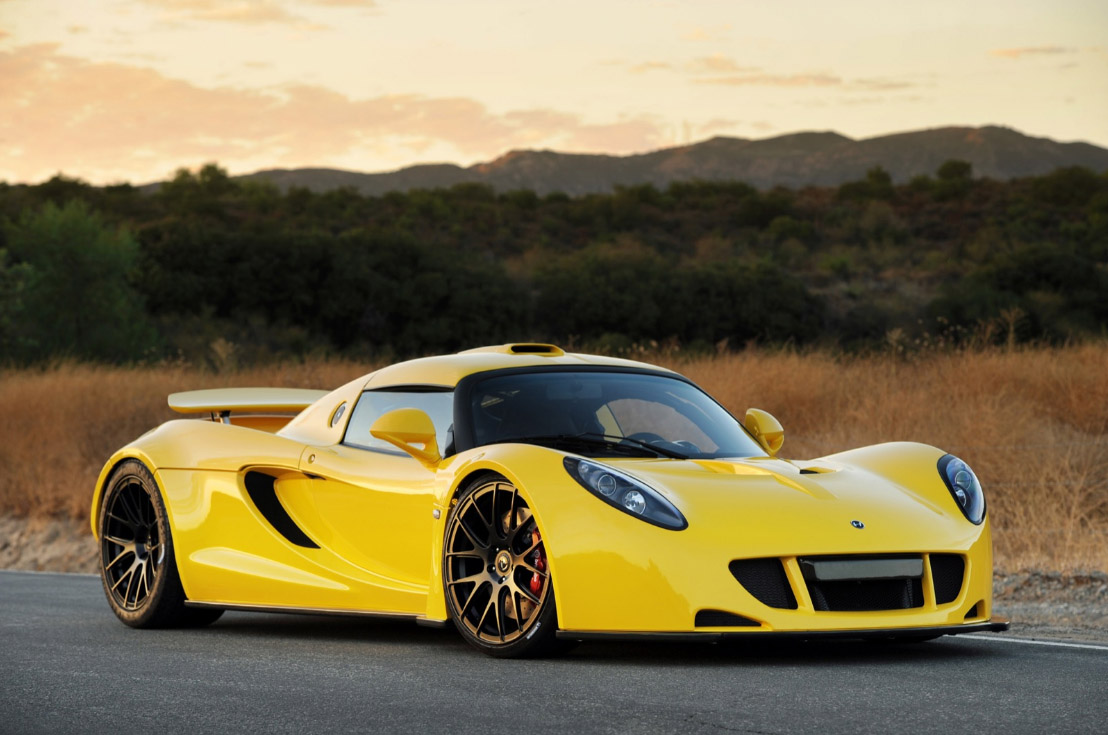
Hennessey Venom GT: 

260 mph (418 km/h), 0-60 in 2.5 seconds, has a 6.2-liter LS9 Turbocharged V8 Twin Turbo V8 Engine producing 1200 hp, has a price tag of $950,000. The Venom GT has yet to be tested and proven, but could possibly hit a top speed of 275 mph. This might just be the Veyron Super Sport's closest competitor!


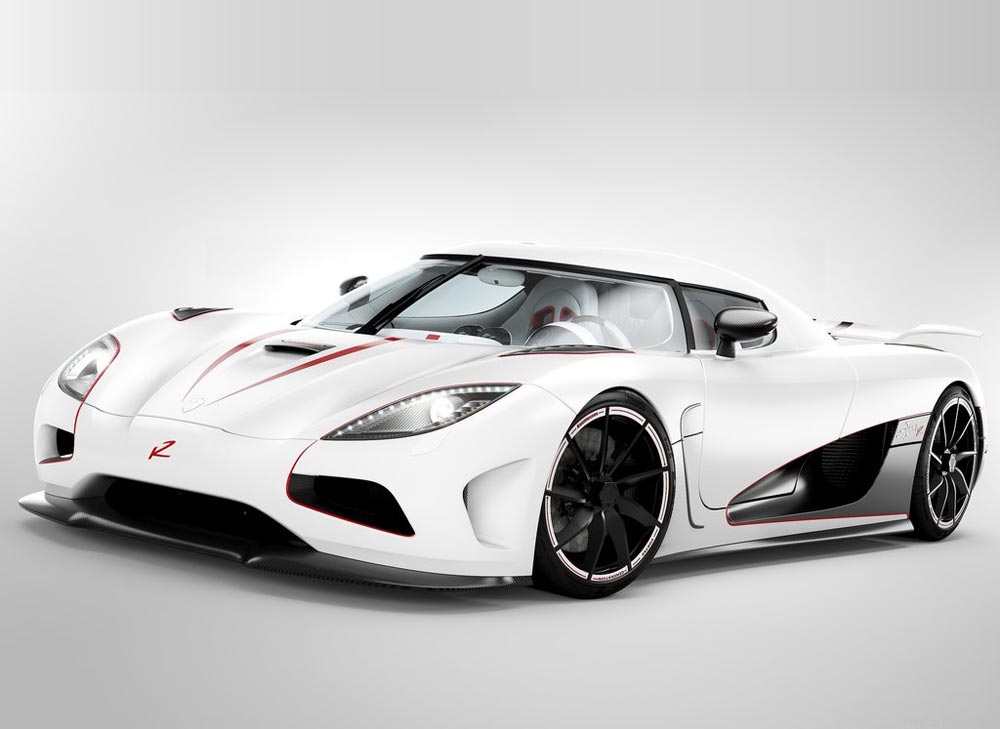
Koenigsegg Agera R:

260 mph (418 km/h), 0-60 in 2.9 secs. 5.0-liter V8 Engine with twin turbo’s, housing 1099 hp. Base price is $1,600,000. If you're into snow sports, the Agera R can be fitted with a Ski Box as well as winter tires, not that I would take one on a ski trip or anything like that. While the Agera R has a massive theoretical top speed, the current tested top speed is 260 mph. Expect this snow car to be the Bugatti's arch enemy for the next 5 years.


Also a tie for #3.


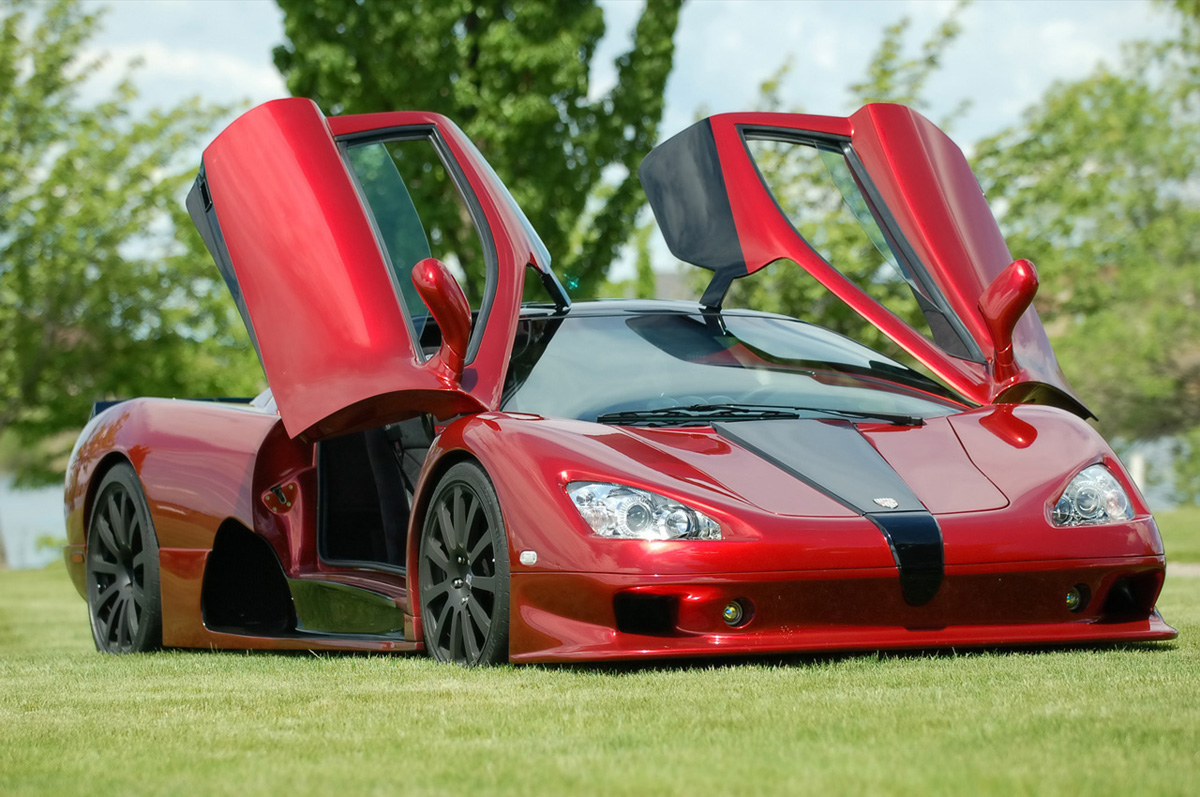
3.SSC Ultimate Aero: 

257 mph (413 km/h), 0-60 in 2.7 secs. Twin-Turbo V8 Engine with 1183 hp, base price is $654,400. Tested in March 2007 by Guinness World Records, The SSC Ultimate Aero was the fastest car in the world from March 2007 to July 2010. On March 2011, the Koenigsegg Agera R also surpassed it, forcing this American made car to the #3 spot. Shelby SuperCars will continue their quest to reclaim the fastest car title, and their new SSC Tuatura might do the job (we'll just have to wait).


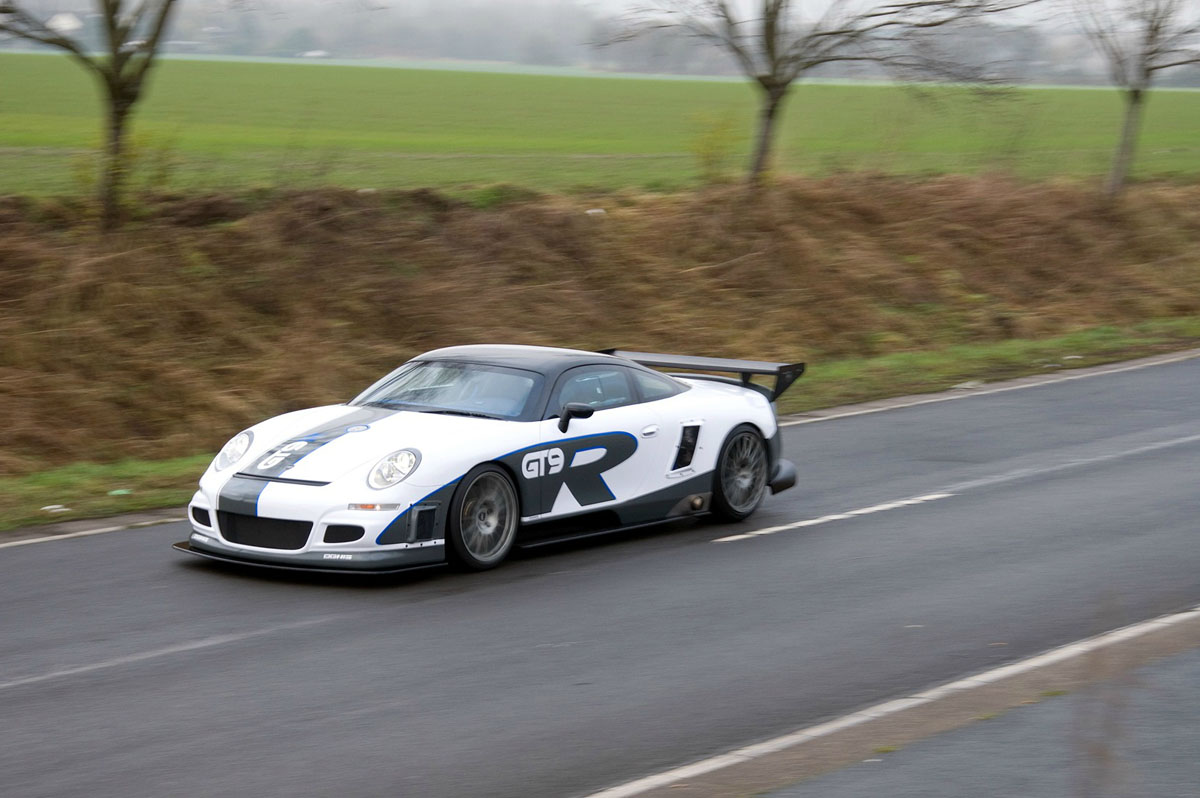
3. 9ff GT9-R:

 257 mph (413 km/h), 0-60 in 2.9 secs. 4.0 Litre V6 Twin-Turbo Engine with 1120 hp, base price is $695,000. Based on the Porsche 911, the 9ff GT9-R 1120 hp version is limited to 20 units and the exterior may be modified to suit the owner.


4. Saleen S7 Twin-Turbo:

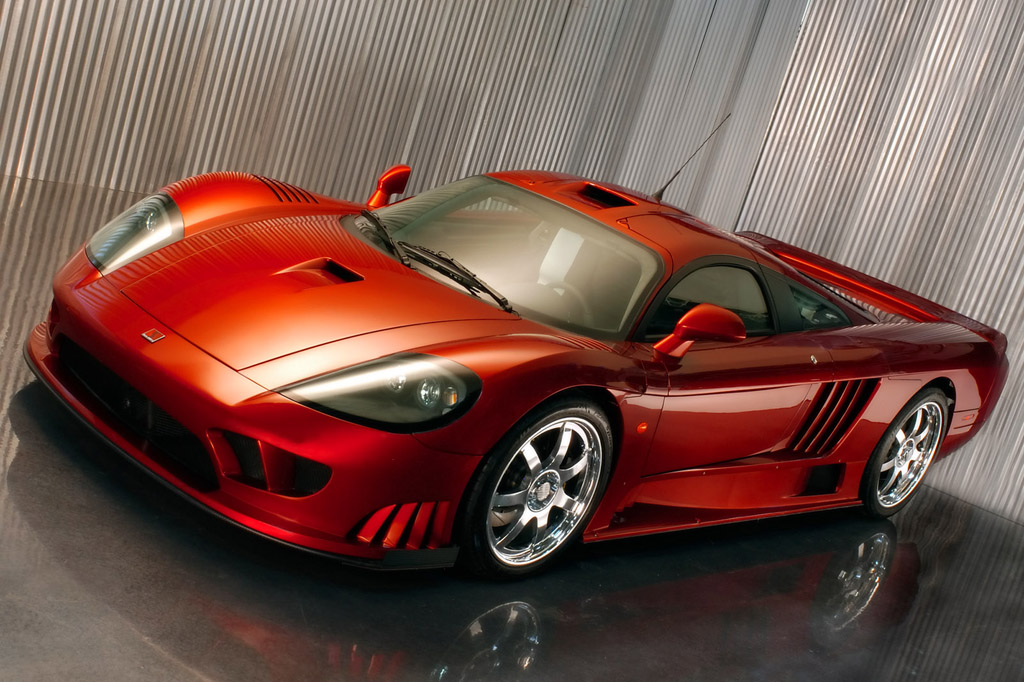
248 mph (399 km/h), 0-60 in 2.8 secs. Twin Turbo All Aluminum V8 Engine with 750 hp, base price is $555,000. Smooth and bad-ass. It will make you want to show it off non-stop.


5. Koenigsegg CCX:

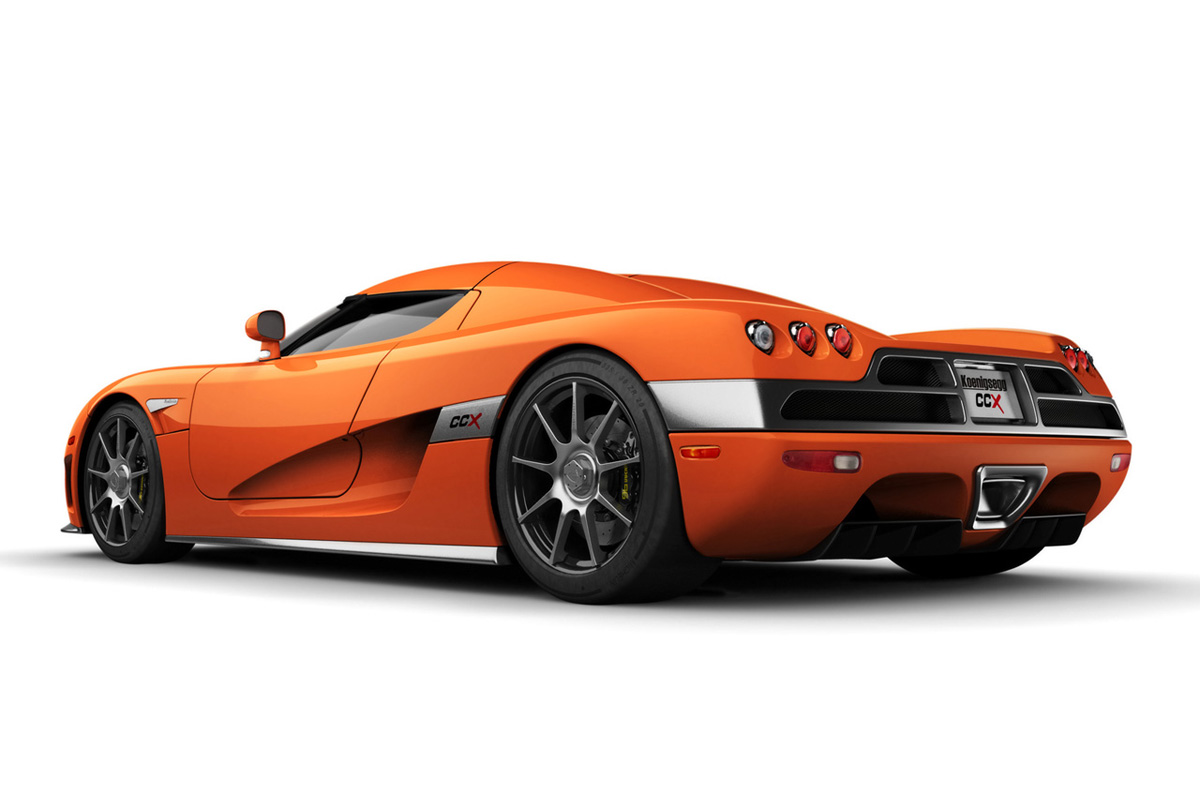
 245 mph (394 km/h), 0-60 in 3.2 secs. 90 Degree V8 Engine 806 hp, base price is $545,568. Made in Sweden, it is the older brother of the Agera R, only losing to 4 other supercars in the world.


6. McLaren F1:

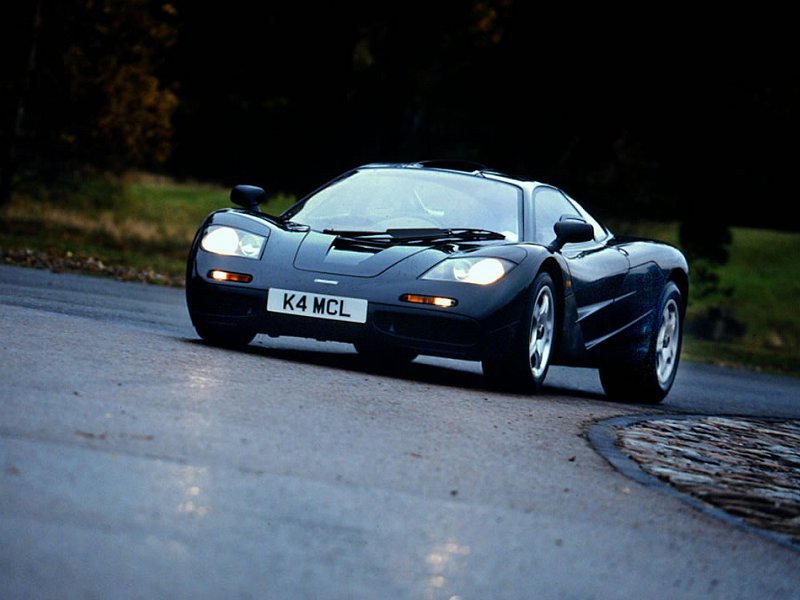
 240 mph (386 km/h), 0-60 in 3.2 secs. BMW S70/2 60 Degree V12 Engine with 627 hp, base price is $970,000. The fastest car in the 20th century with doors that looks like bat wings. Maybe Batman needs to order one and paint it black.


7. Zenvo ST1:

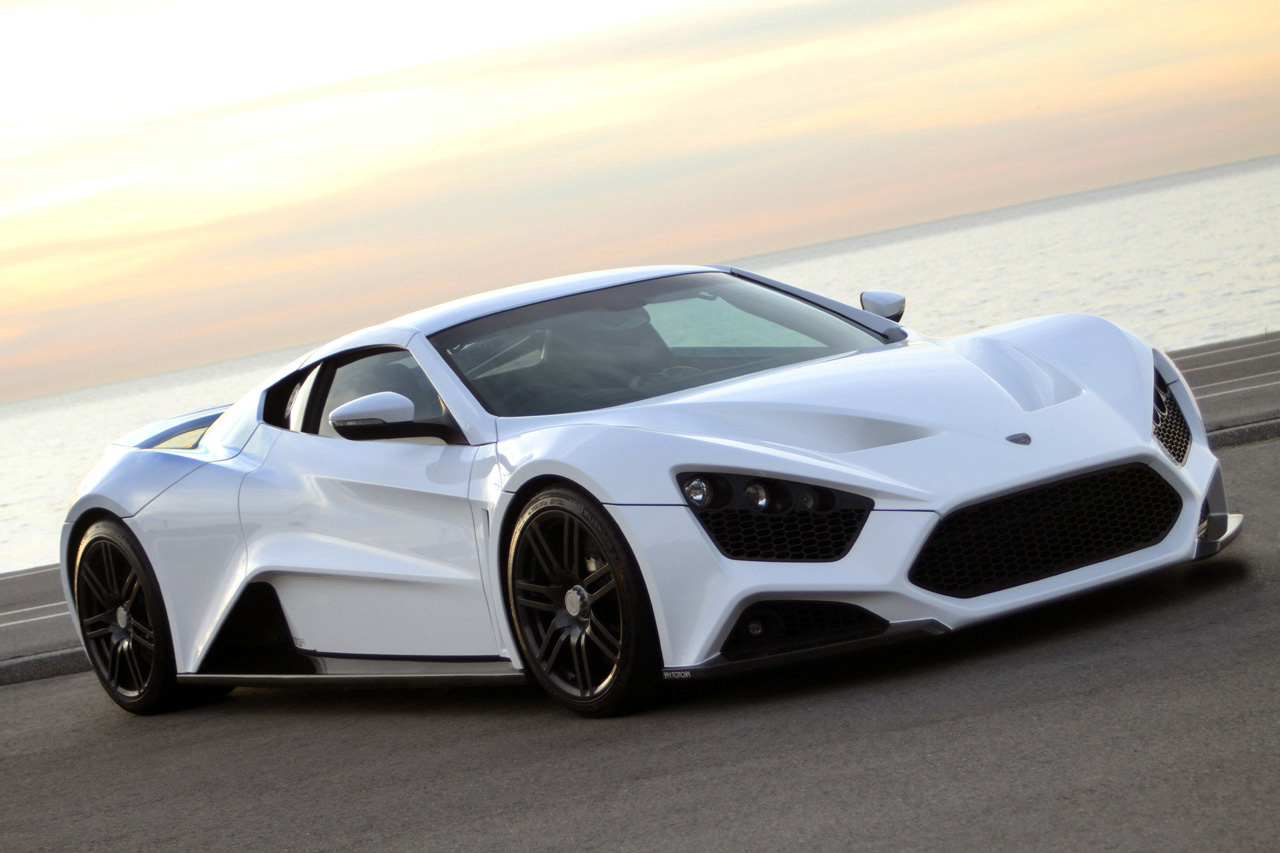
 233 mph (374 km/h), 0-60 in 2.9 secs. Twin-Charged 7.0 liter V8 Engine forging 1,104 hp. Base price: $1,225,000. The first Supercar from Zenvo Automotive, a Danish sports car company in pursuit of speed and perfection. This 100% Danish made supercar is limited to 15 units and the company even promised "flying doctors" to keep your baby functioning.


There is a tie for 8th place at 225 mph.


8. Gumpert Apollo:

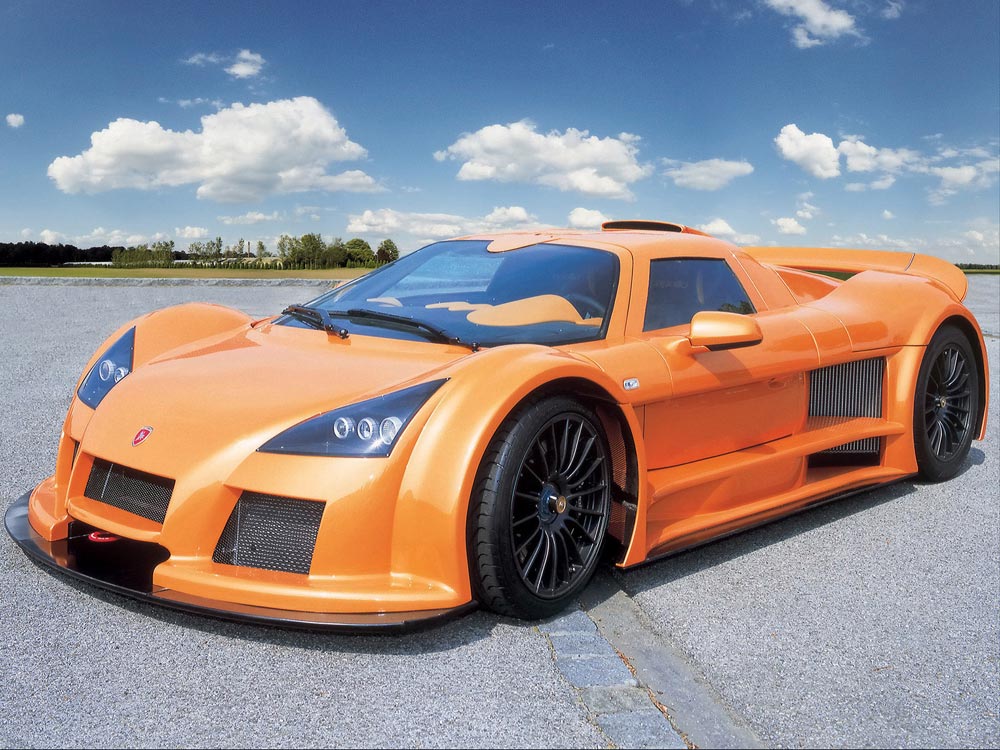
 225 mph (362 km/h), 0-60 in 3.0 secs, 4.2 liter V8 Engine that houses 650 hp. Base price: $450,000. Gumpert claims that the Apollo was designed such that it could drive upside-down in a tunnel with speeds at 190 mph or above. Of course, no one has tested this yet.


8. Noble M600:

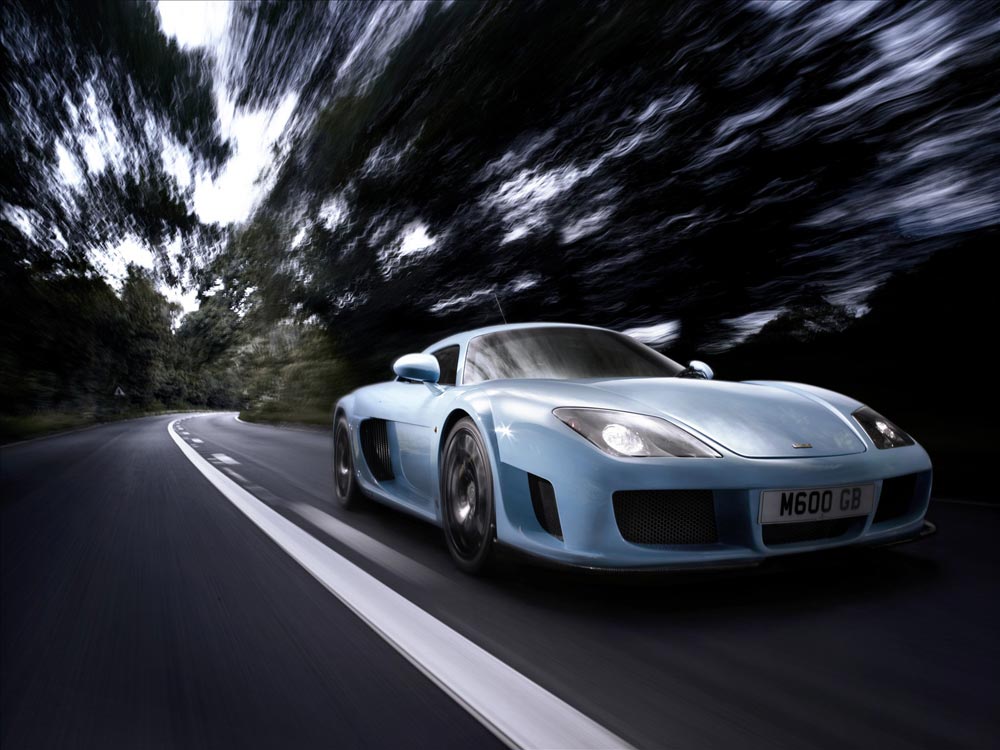
 225 mph (362 km/h), 0-60 in 3.7 secs. Twin-turbocharged 4.4-liter V8 Engine with 650 hp. Base price is $330,000. The Noble M600 also happens to be a very cool car. Its inconspicuous design sports a slender and contoured body which does not scream out for attention at every second of the day.


There is a 3-way tie for #9!


9. Aston Martin One-77:

 220 mph (354 km/h), 0-60 in 3.4 secs. 7.3 litre V12 Engine with 750 hp. Base price: $1,850,000. The production of this is limited to 77, hence the name One-77. This is beauty and power packed into One.


9. Ascari A10:

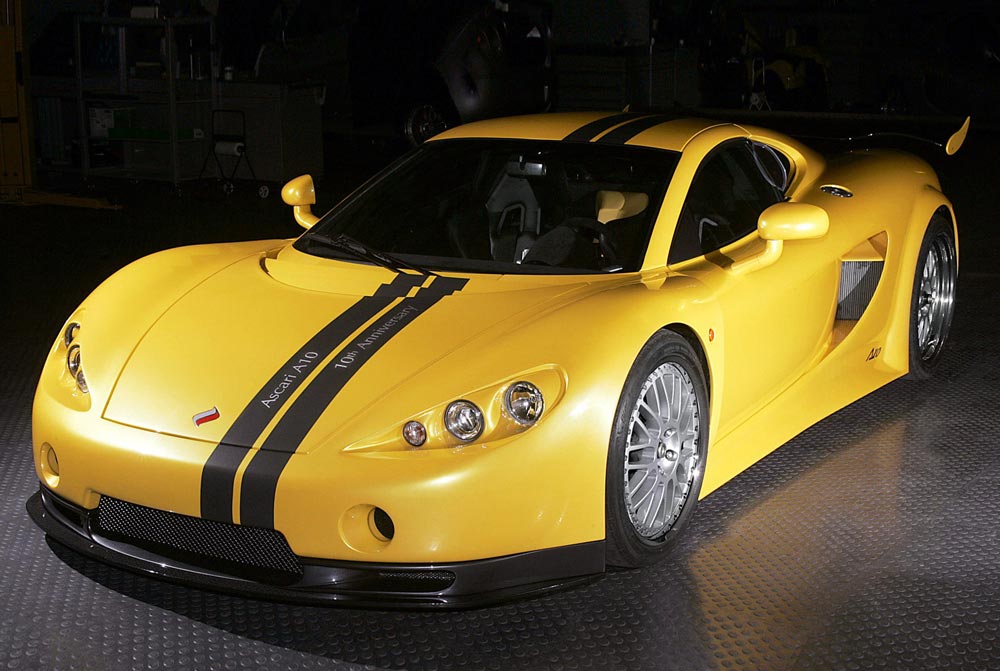
 220 mph (354 km/h), 0-60 in 2.8 secs. 5.0 litre BMW V8 S62 Engine with 625 hp. Base price: $650,000. The company planned to produce 50 of these supercars at its factory in Banbury, England.


9. Lamborghini Aventador:

 220 mph (354 km/h), 0-60 in 2.9 secs. V12 Engine with 700 hp, base price is $379,700. According to Lamborghini, Aventador is the name of a Bull that entered into battle at the Saragossa Arena on October 1993. This is the fastest bull in the world!


We have another 3-way a tie for 10th place:


10. Pagani Zonda Cinque Roadster:

 217 mph (349 km/h), 0-60 in 3.4 secs. Twin turbocharged AMG V12 engine that produces 678 hp. Base price is $1,850,000. The Pagani Zonda Cinque Roadster is a limited-edition, with five ever produced. It is the quintessential exotic and exclusive supercar.


10. Ferrari Enzo:

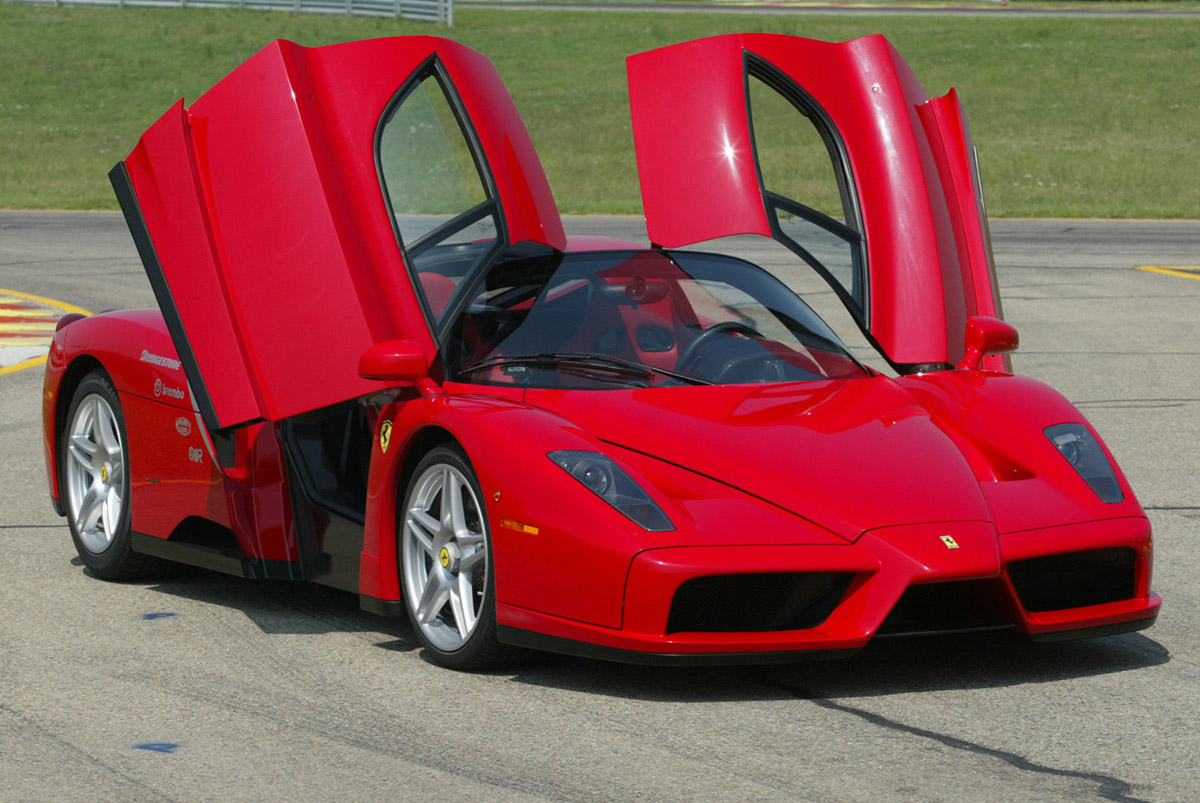
 217 mph (349 km/h), 0-60 in 3.4 secs. F140 Aluminum V12 Engine with 660 hp, base price is $670,000. Only 399 were ever produced; the price goes up every time someone crashes.


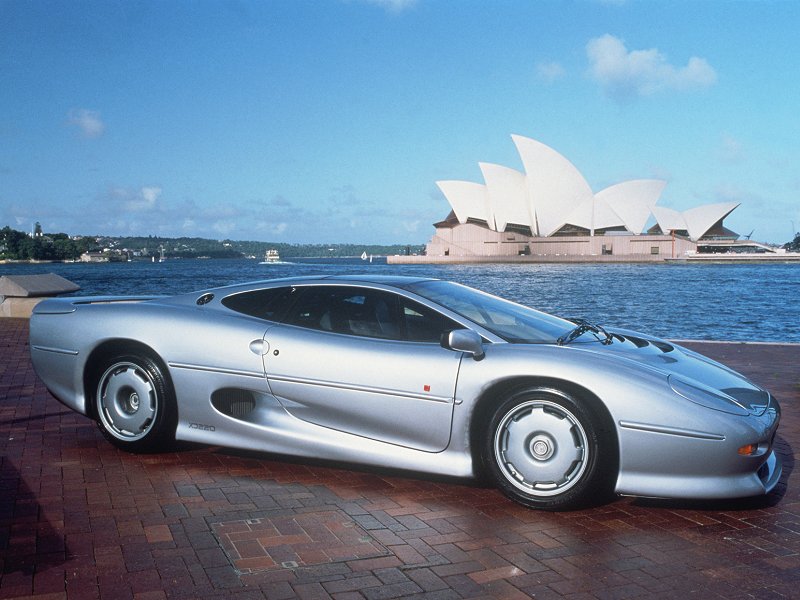
10. Jaguar XJ220:

 217 mph (349 km/h), 0-60 in 3.8 secs. Twin Turbo V6 Engine with 542 hp, base price was $650,000. Made in 1992, this car still has what it takes to make the list.